
Ice buildup in a commercial freezer is more than a messy maintenance issue. For restaurants, grocery stores, cafés, hotels, food storage facilities, bakeries, and commercial kitchens, excess ice can affect cooling performance, increase energy use, block airflow, damage components, and put frozen inventory at risk.
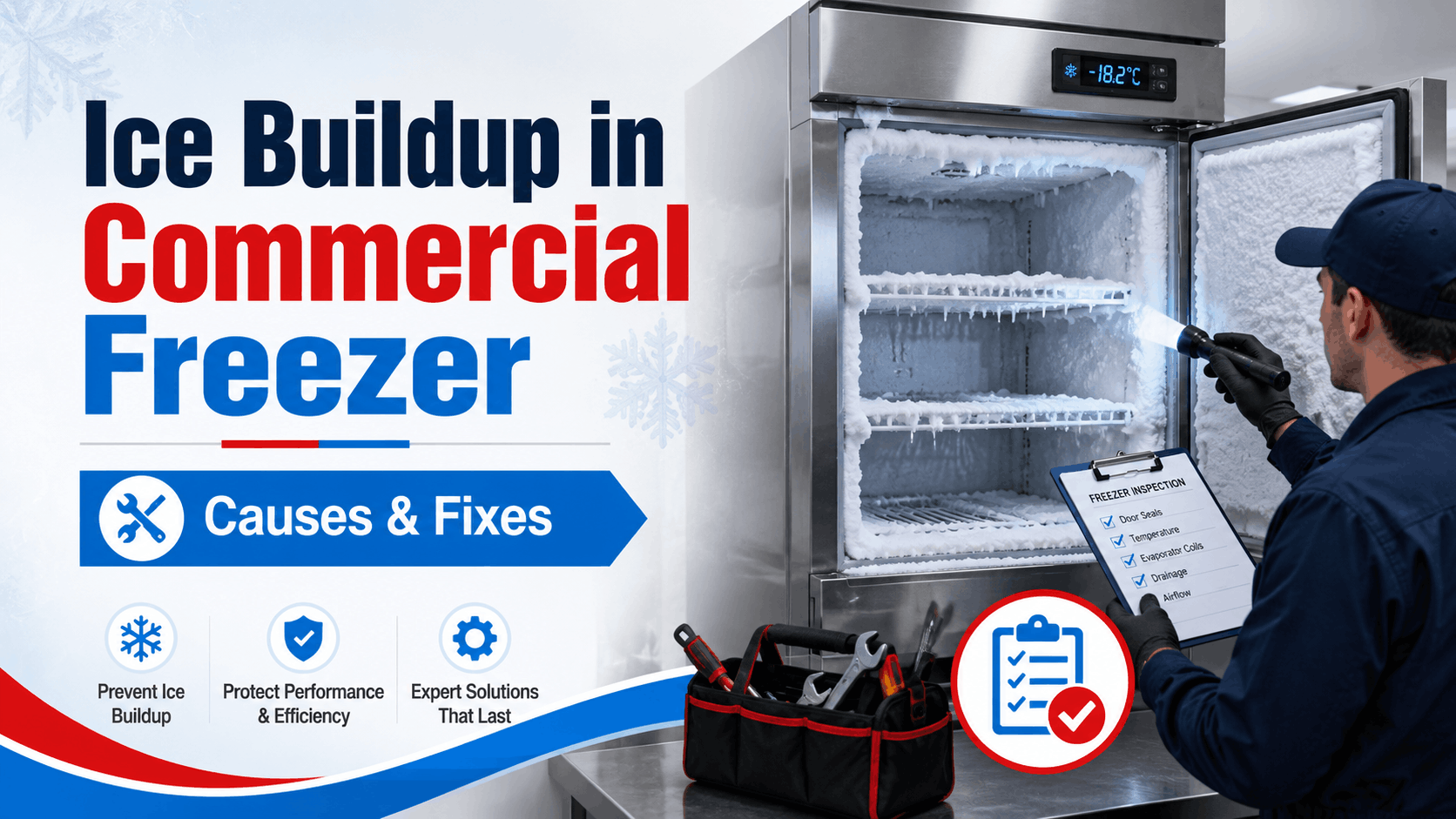
A commercial freezer should maintain safe and stable freezing temperatures. The FDA recommends keeping freezers at 0°F and using a freestanding appliance thermometer because built-in controls do not always show the actual internal temperature.
When frost or ice starts forming around the door, on the evaporator cover, across the floor, near the fan, or around product packaging, it usually means warm humid air is entering the freezer, the defrost system is not working properly, drainage is blocked, or airflow is restricted.
The location of the ice can help identify the most likely cause.
| Ice Location | Possible Cause | What It Usually Means | Best Action |
|---|---|---|---|
| Around the freezer door | Damaged gasket, poor seal, door left open | Warm humid air is entering the freezer | Inspect seal, clean gasket, call technician if damaged |
| Back wall or evaporator cover | Defrost system failure | Frost may be covering the evaporator coils | Schedule professional service |
| Around fan area | Heavy frost near evaporator fan | Ice may be blocking airflow or hitting fan blades | Move product to backup storage and call repair |
| Sheet of ice on floor | Clogged or frozen drain line | Melted defrost water is not draining correctly | Call technician to clear drain and inspect defrost cycle |
| Ceiling or entry area | Door traffic, air leaks, heater or strip curtain issue | Moist air is entering during operation | Check door closure, curtains, and door heaters |
| Ice crystals on products | Temperature fluctuation or packaging issue | Food may have thawed and refrozen or been exposed to air | Check product quality and freezer temperature |
Frost commonly forms when moisture in warm air meets very cold surfaces inside the freezer. In frost-free systems, the defrost cycle warms the evaporator coils periodically so frost can melt and drain away. If that process fails, frost can continue building until cooling performance drops.
A thin layer of frost may not look serious at first, but commercial freezers work under heavy pressure. Doors open often, staff move product in and out, warm kitchen air enters the cabinet, and the equipment must recover quickly.
Heavy ice buildup can cause:
If your commercial freezer has thick frost, repeated ice on the floor, or temperatures that keep moving above the safe range, call Merit Appliance Repairs for professional commercial freezer diagnostics in the St. Paul and Minneapolis metropolitan area.
Book Commercial Freezer ServiceA damaged gasket is one of the most common causes of commercial freezer ice buildup. If the door seal is cracked, loose, dirty, torn, or compressed, warm humid air can enter the freezer. That moisture freezes on cold surfaces and creates frost around the door, shelves, ceiling, or evaporator area.
Warning signs include:
Even a small gap can create a large ice problem in a busy kitchen. Door seal failure is commonly linked with freezer frost and ice because humid air enters the compartment and freezes.
Commercial freezers are opened many times during service, deliveries, prep work, and inventory checks. Every time the door opens, warm air enters. If the door stays open too long, moisture enters faster than the freezer can remove it.
This is especially common in:
Staff training can reduce this issue. Keep doors closed, organize inventory clearly, and avoid searching inside the freezer with the door open.
A commercial freezer’s defrost system is designed to remove frost from the evaporator coil. If the defrost heater, timer, thermostat, sensor, control board, or termination switch fails, frost can build up faster than the system can clear it.
Common signs of defrost failure include:
During a normal defrost cycle, melted frost should drain away through the evaporator drain line. If that drain is blocked by ice, debris, food particles, or sludge, water has nowhere to go. It can refreeze at the bottom of the freezer and form a sheet of ice.
Signs of a drain problem include:
Commercial freezers need proper airflow to maintain even temperatures. When boxes, pans, or product stacks block vents, cold air cannot move properly. That can create warm spots in one area and frost buildup in another.
Blocked airflow can happen when:
A freezer should be organized so cold air can circulate. Overloading the freezer may seem efficient, but it can reduce performance and increase frost problems.
Putting warm items directly into a freezer can release moisture into the cabinet. That moisture can freeze on walls, coils, fans, or product packaging.
This is common when kitchens place:
For best results, cool products properly before freezing, cover containers, and avoid loading warm food into a freezer that is already struggling.
Walk-in freezers often use door heaters, threshold heaters, strip curtains, air curtains, door closers, and heated pressure relief vents to reduce moisture entry and prevent ice around entry points. If these parts fail, ice can build around the door, ceiling, floor, or frame.
Possible signs include:
Walk-in freezer ice near the entrance should be taken seriously because it can become a slip hazard and may indicate a sealing or heater issue.
Dirty condenser coils do not usually create ice directly inside the freezer, but they can make the system work harder and reduce cooling efficiency. If the refrigeration system cannot reject heat properly, it may run longer, recover slowly, and create temperature instability.
Some ice patterns can point to deeper refrigeration problems. For example, uneven frost on part of the evaporator coil may be linked to low refrigerant, a restriction, or a sealed system issue. These problems require professional tools and should not be guessed at.
| Cause | Common Signs | Solution |
|---|---|---|
| Damaged gasket | Frost around door, door not closing tightly | Clean gasket, check alignment, replace damaged seal |
| Door left open too long | Frost near entrance, temperature fluctuation | Train staff, organize inventory, install door closer if needed |
| Failed defrost system | Frost on back wall, fan noise, weak airflow | Test heater, timer, sensor, thermostat, or control board |
| Blocked drain line | Ice sheet on floor, leaking water | Clear drain line and inspect drain heater if equipped |
| Blocked airflow | Uneven freezing, frost near vents | Reorganize product and keep vents clear |
| Warm product loading | Ice crystals, frost after restocking | Cool products properly and seal containers |
| Walk-in door heater issue | Ice around frame or threshold | Inspect heater, door closer, strip curtain, and frame seal |
| Dirty condenser coils | Long run time, poor recovery | Clean coils and schedule maintenance |
| Refrigerant issue | Uneven coil frost, weak cooling | Call technician for sealed system diagnosis |
Some checks are safe for staff to perform. Others should be left to a commercial refrigeration technician.
Commercial freezer ice buildup often needs more than a quick manual defrost. A temporary defrost may remove the visible ice, but the issue can return if the root cause is a gasket leak, defrost failure, drain problem, airflow restriction, fan issue, thermostat fault, or sealed system problem.
Merit Appliance Repairs provides commercial refrigeration troubleshooting and service in the St. Paul and Minneapolis metropolitan area. Their commercial refrigeration services include reach-in refrigerators and freezers, walk-in coolers and freezers, under-counter and worktop units, prep tables, bar refrigeration, display cases, chef bases, blast chillers, and more.
If your commercial freezer keeps icing up after cleaning or defrosting, schedule service with Merit Appliance Repairs. A professional diagnosis can help protect your inventory, reduce downtime, and prevent repeat freezer problems.
Schedule Freezer DiagnosticsRegular maintenance is the best way to reduce ice buildup and keep commercial freezers reliable.
| Frequency | Maintenance Task |
|---|---|
| Daily | Check freezer temperature with a thermometer |
| Daily | Make sure doors close fully after each use |
| Daily | Keep product away from vents and fans |
| Daily | Watch for frost around door frames |
| Weekly | Clean door gaskets and inspect for cracks |
| Weekly | Check for water or ice on the floor |
| Weekly | Make sure shelves are not overloaded |
| Monthly | Inspect airflow around the unit |
| Monthly | Clean accessible condenser areas if safe |
| Monthly | Check fan noise, drain issues, and frost patterns |
| Quarterly | Schedule professional commercial refrigeration inspection |
| Immediately | Call for service if ice returns quickly after defrosting |
Preventing freezer ice buildup requires both good staff habits and regular equipment care.
Best practices include:
Small habits can make a big difference. A freezer that opens less often, seals tightly, drains properly, and moves air freely will usually have fewer ice problems.
Call a technician if:
A commercial freezer is too important to guess on. Delaying repair can lead to higher utility bills, damaged parts, unsafe storage temperatures, and product loss.
Need help with a walk-in freezer, reach-in freezer, under-counter freezer, display freezer, or commercial refrigeration system? Contact Merit Appliance Repairs for professional commercial freezer troubleshooting and repair.
Request Commercial Freezer RepairIce buildup in a commercial freezer usually points to a moisture, airflow, defrost, drainage, sealing, or refrigeration system problem. While basic cleaning and door checks can help, repeated ice buildup should not be ignored.
The most common causes include damaged door gaskets, frequent door openings, failed defrost components, clogged drain lines, blocked airflow, warm product loading, and walk-in freezer entry issues. If the ice keeps coming back, the freezer needs professional diagnosis.
For restaurants, food businesses, and commercial kitchens in the St. Paul and Minneapolis metro area, Merit Appliance Repairs can help identify the root cause, restore freezer performance, and reduce the risk of inventory loss.
A small amount of frost can happen when moisture enters the freezer, but thick ice, repeated frost, ice on the floor, or ice near the fan is not normal. It usually means there is a sealing, defrost, drain, or airflow problem.
A commercial freezer may keep icing up because of a damaged door gasket, frequent door openings, failed defrost system, blocked drain line, poor airflow, warm product loading, or refrigerant-related issue.
You can remove loose frost during safe cleaning, but do not chip ice from coils, fans, panels, or drain areas with sharp tools. This can damage the freezer and create a bigger repair issue.
Ice on the floor often points to moisture entering through the door, a drain problem, a door heater issue, or water from the defrost cycle refreezing before it can drain properly.
A clicking, scraping, or rattling freezer fan may mean ice has built up near the evaporator fan. Turn to backup storage if temperatures are unstable and schedule service before the fan motor is damaged.
Yes. Heavy frost can block airflow and reduce heat transfer at the evaporator coil. The freezer may look cold because ice is visible, but product temperatures may still rise if air cannot circulate properly.
Merit Appliance Repairs provides commercial refrigeration troubleshooting and repair in the St. Paul and Minneapolis metropolitan area, including reach-in freezers, walk-in coolers and freezers, prep tables, display cases, chef bases, blast chillers, and other commercial refrigeration equipment.