Commercial Refrigerator Not Cooling? 7 Causes & Fixes
A commercial refrigerator that stops cooling can put food safety, inventory, and business operations at risk. Learn the most common causes, what you can safely check, and when to call a commercial refrigeration technician in St. Paul, MN.
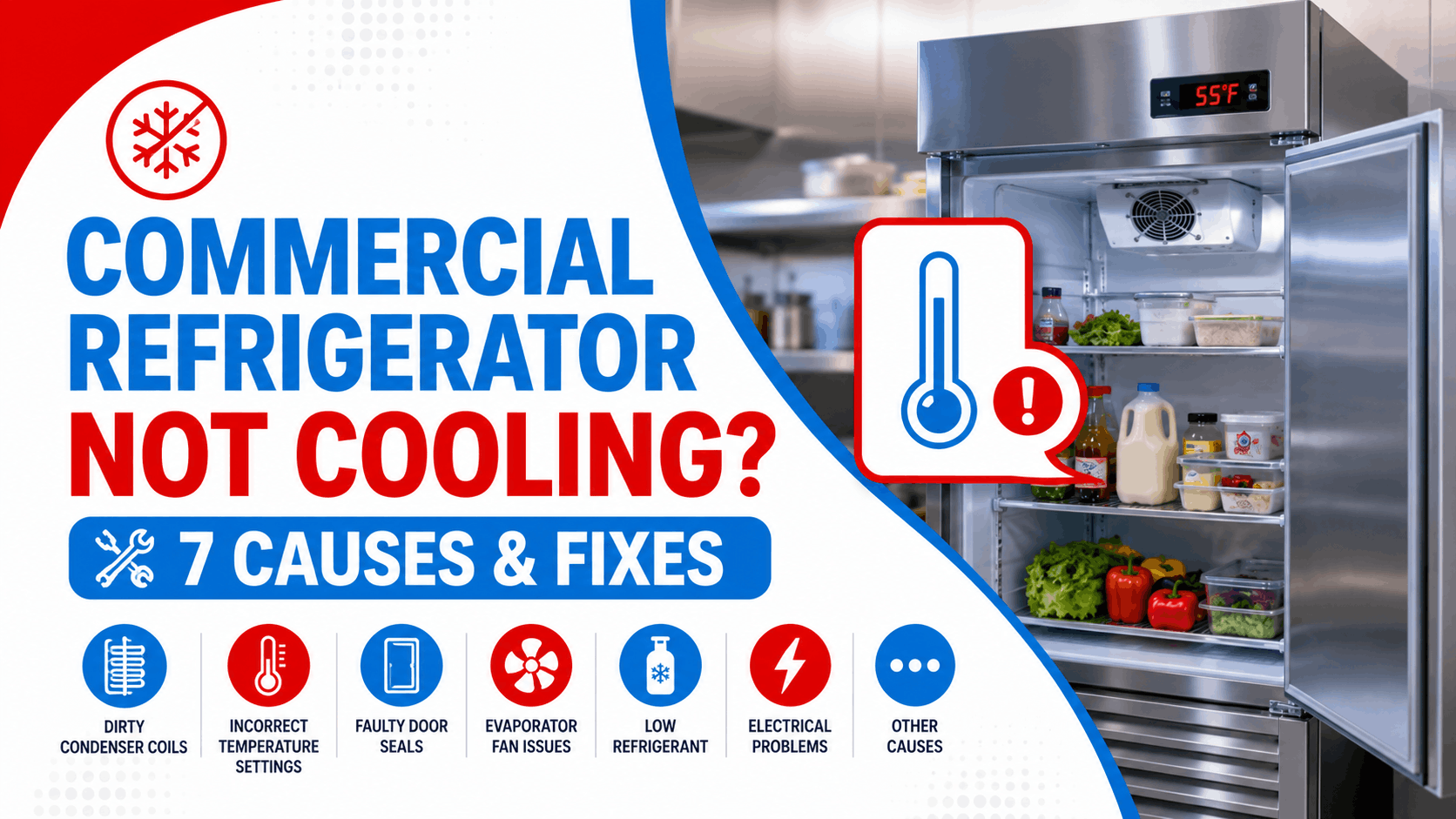
Commercial Refrigerator Not Cooling in St. Paul, MN? Start Here
A commercial refrigerator that is not cooling is more than a simple equipment problem. For restaurants, grocery stores, cafes, bars, convenience stores, commercial kitchens, and food service businesses in St. Paul, it can lead to spoiled inventory, unsafe food temperatures, lost revenue, and business disruption.
When a reach-in cooler, walk-in refrigerator, prep table, display case, or undercounter refrigerator starts running warm, the first step is to act quickly. Cold food must stay within safe temperature limits.
Minnesota food safety guidance says TCS foods should be kept cold at 41°F or below, while the FDA recommends keeping refrigerators at or below 40°F for food safety. Minnesota Department of Agriculture
Quick Troubleshooting Table
Use this table to narrow down the likely issue before calling for service.
| Problem Area | Common Signs | What You Can Check | When to Call a Technician |
|---|---|---|---|
| Dirty condenser coils | Unit runs constantly, warm cabinet, high energy use | Check if coils are covered with dust, grease, or debris | If cleaning does not restore cooling |
| Faulty door gasket | Warm air leaks, moisture, frost, door not sealing | Inspect cracked, loose, or torn gasket | If gasket needs replacement or door alignment |
| Blocked airflow | Uneven cooling, warm spots, frozen items near vent | Move products away from vents | If evaporator fan is not working |
| Low refrigerant | Poor cooling, ice on coils, bubbling sound | Do not add refrigerant yourself | Call an EPA certified technician |
| Bad thermostat or sensor | Wrong temperature reading, short cycling | Compare display with thermometer | If readings are inaccurate |
| Evaporator fan issue | Fan silent, warm cabinet, frost buildup | Listen for fan operation | If fan motor, blade, or wiring is faulty |
| Compressor problem | Clicking, humming, no cooling, unit overheats | Check power and reset breaker only | Call for urgent repair |
Need fast commercial refrigerator troubleshooting?
Book a local service visit before warm temperatures cause inventory loss.
First Steps Before Calling for Repair
Before assuming the system has failed, check a few basic items. These steps may help you identify a simple issue.
- Make sure the refrigerator is plugged in.
- Check if the breaker has tripped.
- Confirm the thermostat setting has not been changed.
- Look for blocked vents inside the cabinet.
- Make sure the door is fully closed.
- Check the door gasket for gaps or cracks.
- Remove items that are packed too tightly.
- Place a separate thermometer inside the refrigerator.
- Listen for the fan and compressor.
- Look for water leaks, frost, ice, or unusual noises.
Important: Do not open the door repeatedly while troubleshooting. Every opening allows warm kitchen air into the unit and makes the refrigerator work harder.
Dirty Condenser Coils
Dirty condenser coils are one of the most common reasons a commercial refrigerator stops cooling properly. These coils release heat from the refrigeration system. In busy kitchens, they often collect dust, flour, grease, lint, and debris.
When condenser coils are dirty, the system cannot remove heat efficiently. The compressor may run longer than normal. The cabinet temperature may rise even though the unit sounds like it is working.
Signs of Dirty Condenser Coils
- Refrigerator runs constantly
- Cabinet temperature slowly rises
- Compressor feels hot
- Higher energy bills
- Poor cooling during busy kitchen hours
- Dust or grease visible near the coil area
Fix
Turn off the unit before cleaning. Use a soft brush, coil brush, or vacuum to remove dust and debris. Avoid bending the coil fins. If the coils are greasy, a commercial coil cleaner may be needed.
For St. Paul restaurants and commercial kitchens, condenser coils should be cleaned regularly because kitchen grease and dust build up quickly.
Damaged Door Gasket or Poor Door Seal
A commercial refrigerator depends on a tight door seal. If the door gasket is cracked, loose, hardened, or torn, warm air enters the cabinet. This makes the system work harder and can cause moisture, frost, and temperature swings.
Signs of a Bad Door Gasket
- Door does not close tightly
- Moisture around the door frame
- Frost near the opening
- Warm air leaking into the cabinet
- Food near the door is warmer
- Door pops open after closing
- Gasket is cracked, sticky, loose, or torn
Fix
Inspect the gasket carefully. Clean it with mild soap and warm water. Food debris can stop the gasket from sealing. If the gasket is damaged, replace it. If the door still does not seal after gasket replacement, the hinges or door alignment may need service.
Blocked Airflow Inside the Refrigerator
Commercial refrigerators need proper airflow to keep the cabinet temperature even. When boxes, pans, containers, or food products block the vents, cold air cannot circulate.
Signs of Blocked Airflow
- Some shelves are cold while others are warm
- Food near the vent freezes
- Food near the door gets warm
- Temperature changes after restocking
- Fan is running but cooling is uneven
Fix
Rearrange the stored items. Leave space between products and vents. Do not push boxes against the back wall. Avoid overloading shelves. Use approved shelving that allows airflow.
For walk-in coolers, avoid stacking boxes too close to evaporator fans. Air needs room to move across the entire storage area.
Still not cooling after basic checks?
A technician can test fans, controls, refrigerant pressure, and compressor components.
Low Refrigerant or Refrigerant Leak
Low refrigerant can stop a commercial refrigerator from cooling properly. Refrigerant does not normally get used up. If the refrigerant level is low, there is usually a leak somewhere in the system.
This is not a DIY repair. Refrigerant handling must be done by a qualified technician. EPA Section 608 rules require technicians to pass an approved certification test for the type of equipment they service.
Signs of Low Refrigerant
- Refrigerator runs but does not cool well
- Ice forms on evaporator coils
- Bubbling or hissing sounds
- Longer cooling cycles
- Warm cabinet temperature
- Compressor runs continuously
Fix
Call a commercial refrigeration technician. The technician should locate the leak, repair it, test the system, and recharge it correctly. Simply adding refrigerant without fixing the leak is not a proper long term solution.
Faulty Thermostat or Temperature Sensor
A bad thermostat or sensor can cause the refrigerator to cool too little, cool too much, or cycle at the wrong times. In some cases, the display may show a safe temperature while the actual cabinet temperature is higher.
Signs of a Thermostat or Sensor Problem
- Display temperature does not match actual temperature
- Unit turns on and off too often
- Unit does not start when temperature rises
- Cabinet feels warm but display looks normal
- Products freeze even at normal settings
Fix
Place a separate appliance thermometer inside the refrigerator and compare readings. If the display is inaccurate, the thermostat, control board, probe, or sensor may need testing or replacement.
Do not rely only on the digital display when food safety is at risk. The USDA explains that bacteria grow quickly in the temperature danger zone between 40°F and 140°F. USDA FSIS
Evaporator Fan Not Working
The evaporator fan moves cold air through the refrigerator. If the fan motor fails, the fan blade is blocked, or wiring is damaged, the unit may run but still not cool evenly.
Signs of an Evaporator Fan Issue
- No fan sound inside the unit
- Warm refrigerator cabinet
- Frost or ice near the evaporator area
- Uneven cooling
- Fan starts and stops randomly
- Clicking or rattling noise from the fan area
Fix
Check whether stored items are blocking the fan. If nothing is blocking it and the fan is not running, call a technician. The motor, fan blade, wiring, switch, or control board may need repair.
Compressor or Start Component Failure
The compressor is the main part of the refrigeration system. It moves refrigerant through the system and helps remove heat from the cabinet. If the compressor or its start components fail, the refrigerator may stop cooling completely.
Signs of Compressor Problems
- Refrigerator is warm
- Compressor clicks but does not start
- Humming sound from the back or bottom of the unit
- Breaker trips repeatedly
- Compressor feels very hot
- Unit turns on briefly, then shuts off
- No cooling even after cleaning coils and checking airflow
Fix
Check the power supply and breaker. If the unit still does not cool, call a commercial refrigeration technician. The issue may involve the start relay, capacitor, overload, wiring, compressor, or control board.
Commercial Refrigerator Still Running Warm?
Do not wait until inventory spoils. Schedule commercial refrigeration repair in St. Paul, MN.
What Temperature Should a Commercial Refrigerator Maintain?
For food service businesses, safe cold holding is critical. In Minnesota, TCS foods must be kept at 41°F or colder. TCS foods include meat, poultry, seafood, dairy, eggs, cooked vegetables, cut tomatoes, cut leafy greens, and other foods that need time and temperature control for safety.
Many commercial kitchens aim for a refrigerator range around 35°F to 38°F to provide a safe buffer, but the exact set point depends on the equipment, food type, and operating conditions.
Urgent note: If your commercial refrigerator is staying above safe temperature, treat the issue as urgent.
When Is a Warm Commercial Refrigerator an Emergency?
A warm commercial refrigerator should be treated as an emergency when food safety, inventory, or business operations are at risk.
- The cabinet temperature is above safe cold holding range.
- You store meat, seafood, dairy, prepared foods, or other TCS items.
- The unit is making clicking, buzzing, or grinding noises.
- You see heavy frost or ice buildup.
- The compressor is very hot.
- Water is leaking near electrical parts.
- The breaker keeps tripping.
- Multiple units are affected.
- The cooler is part of a restaurant, grocery store, bar, cafe, or commercial kitchen.
If food has been above safe temperature too long, follow your food safety procedures. The FDA says food may be safe if the refrigerator stayed at or below 40°F or if food was above 40°F for only 2 hours or less. FDA food safety guidance
Common Commercial Refrigerators That May Stop Cooling
Different types of commercial refrigeration equipment can develop cooling issues. The cause may vary depending on the unit design.
Reach-In Refrigerators
Reach-in units often stop cooling because of dirty coils, worn gaskets, failed fans, blocked airflow, or thermostat issues.
Walk-In Coolers
Walk-in coolers may have problems with evaporator fans, defrost controls, refrigerant leaks, door seals, drain lines, or compressor components.
Prep Tables
Prep tables often struggle when pans block airflow or when lids are left open during busy service hours.
Display Coolers
Display cases can lose cooling because of poor airflow, dirty coils, bad fans, lighting heat, or frequent door openings.
Undercounter Refrigerators
Undercounter units often collect dust and grease because of their low placement. Poor ventilation can also cause overheating.
Why Commercial Refrigerators Fail More Often in Busy Kitchens
Commercial refrigeration equipment works hard every day. In a busy St. Paul kitchen, a refrigerator may face:
- Frequent door openings
- Grease and dust buildup
- High cooking heat
- Heavy product loads
- Tight installation spaces
- Blocked ventilation
- Long operating hours
- Staff changing thermostat settings
- Worn gaskets from repeated use
Commercial Refrigerator Maintenance Tips
Preventive maintenance helps reduce emergency breakdowns and keeps the system cooling efficiently.
Basic Maintenance Checklist
- Clean condenser coils regularly.
- Check door gaskets for cracks.
- Keep vents clear.
- Avoid overloading shelves.
- Monitor internal temperature daily.
- Keep the area around the unit clean.
Watch for Early Warning Signs
- Unusual noises
- Water leaks
- Fan problems
- Temperature swings
- Ice buildup
- Longer run times
Want to prevent the next breakdown?
Schedule commercial refrigeration maintenance before small problems become expensive repairs.
Should You Repair or Replace a Commercial Refrigerator?
Repair is often the better option when the unit is newer, the cabinet is in good shape, and the repair cost is reasonable. Replacement may make more sense if the unit is very old, inefficient, leaking repeatedly, or has a failed compressor with other major issues.
Consider Replacement If:
- Repair costs are close to the cost of a new unit.
- The refrigerator breaks down often.
- Parts are hard to find.
- Energy use is very high.
- The cabinet is rusted or damaged.
- The compressor has failed on an older unit.
- The unit no longer fits your business needs.
Why Call a Local Commercial Refrigeration Technician in St. Paul, MN?
Commercial refrigeration problems need fast response. A local technician understands the urgency of food service operations and can inspect the unit, identify the cause, and help protect your inventory.
- Test electrical components
- Check refrigerant pressure
- Inspect coils and fans
- Find leaks
- Replace faulty controls
- Repair door gasket issues
- Diagnose compressor problems
- Restore safe cooling
- Recommend maintenance steps
Final Thoughts
When a commercial refrigerator is not cooling, the cause may be simple, such as dirty coils or blocked airflow. It may also be serious, such as a refrigerant leak, failed evaporator fan, bad thermostat, or compressor problem.
For businesses in St. Paul, MN, the key is to respond quickly. Check the simple items first, monitor food temperature, avoid repeated door openings, and call a commercial refrigeration repair technician when the problem continues.
Book Commercial Refrigerator Repair in St. Paul, MN
Get help with walk-in coolers, reach-in refrigerators, prep tables, display cases, and commercial refrigeration equipment.
FAQs
Why is my commercial refrigerator running but not cooling?
It may have dirty condenser coils, blocked airflow, a failed evaporator fan, low refrigerant, a bad thermostat, or compressor problems. Start with basic checks, then call a technician if the temperature does not improve.
Can dirty coils cause a commercial refrigerator to stop cooling?
Yes. Dirty condenser coils stop the system from releasing heat properly. This can make the compressor run longer and cause the refrigerator temperature to rise.
What temperature should my commercial refrigerator be?
Food service refrigerators should keep cold food within safe limits. Minnesota guidance says TCS foods must be kept at 41°F or colder. Many businesses keep refrigerators around 35°F to 38°F for a safety buffer.
Is low refrigerant a common cause of poor cooling?
Yes, but low refrigerant usually means there is a leak. A technician should find and repair the leak before recharging the system.
Should I turn off a commercial refrigerator that is not cooling?
If the compressor is overheating, making loud noises, or the breaker keeps tripping, turn the unit off and call a technician. If food safety is at risk, follow your business food safety plan.
How often should commercial refrigerator coils be cleaned?
In busy kitchens, coils may need cleaning every 1 to 3 months. In lower use environments, cleaning may be less frequent. Grease, dust, and airflow conditions affect the schedule.
Who should I call for commercial refrigerator repair in St. Paul, MN?
Call a local commercial refrigeration repair technician who services restaurants, grocery stores, cafes, bars, walk-in coolers, reach-in refrigerators, prep tables, and display cases.